Food Typography Optical Interaction Poster
Create high-end editorial food posters featuring realistic optical interactions with typography.
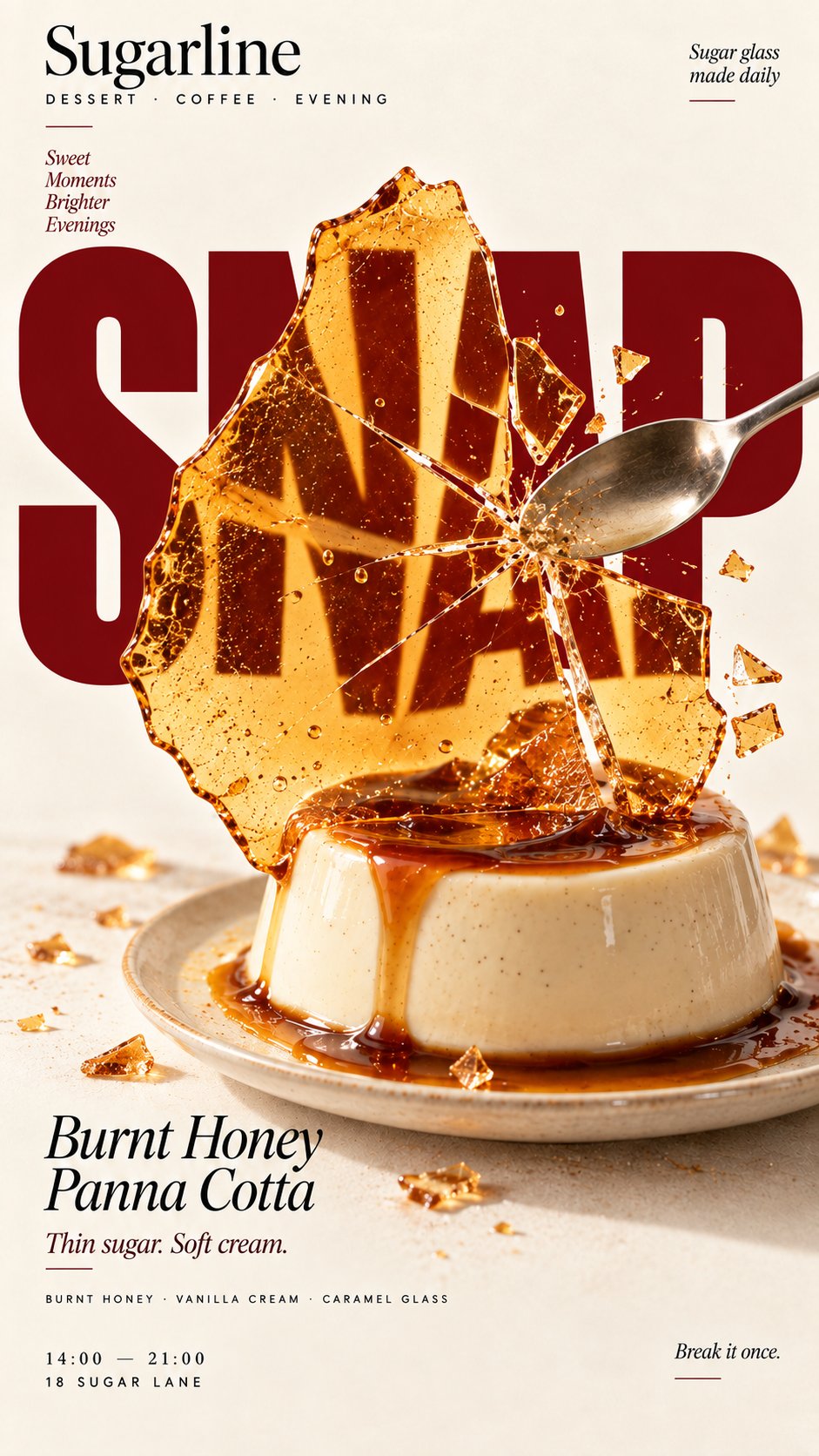
Type: AI-Generated Community Prompt. All sample images are generated via AI models and serve as baseline references only. Prompts are parameterized for transformative search & educational customization.
Report Copyright / Takedown Request
Prompt Template
[BRAND]: {brand}
[PRODUCT]: {product_materials}
[HEADLINE]: {headline}
[INTERACTION]: {interaction}
[ACCENT COLOR]: {accent_color}
[DETAILS]: {details_materials}
Create a {aspect_ratio} vertical food editorial poster combining highly realistic food photography with bold, professionally designed typography.
Use a {background_color}, realistic materials, natural light and a clean editorial composition.
Keep [HEADLINE] completely intact, sharp and normally designed. The food must remain a separate real object and physically change only how the typography is seen according to [INTERACTION].
For “fractured refraction,” place transparent edible material in front of the type, then break it into several large facets so each piece refracts the same letters at slightly different angles.
For “mirror reflection,” use a glossy food surface to reflect the headline with believable curvature, compression and perspective while the original type remains unchanged behind it.
For “deformable refraction,” place a transparent soft food in front of the letters and apply pressure so its changing shape creates stronger local refraction where compressed.
For “ripple-distorted reflection,” reflect the headline on a dark liquid surface, then let real concentric ripples distort only the reflected letters while the original typography stays perfectly sharp.
Make [HEADLINE] large, simple and readable at thumbnail size. The interaction should be understandable within the first second.
Use [ACCENT COLOR] with cream, natural food colors and dark neutrals. Add only a few meaningful details such as [BRAND], product name, ingredients, one short line of copy, opening hours or address.
Keep props minimal. Avoid food-shaped letters, photographic type fills, CGI materials, digital warp effects, fake reflection overlays, random distortion, numbered labels, 01/02, Vol. or sparkles.
The final poster should work as a stop-scroll image: one bold headline, one realistic food object, and one surprising but physically believable optical interaction.
Keep the typography professionally designed and untouched — let the real food change how it is seen.
Variables
- Brand Name (brand) - text
- Headline Word (headline) - text
- Optical Interaction Type (interaction) - select
- Typography Accent Color (accent_color) - select
- Canvas Aspect Ratio (aspect_ratio) - select
- Background Style & Substrate (background_color) - select
- [PRODUCT] (product_materials) - select
- [DETAILS] (details_materials) - select
Tags
food postertypographyeditorial designcreativeadvertising